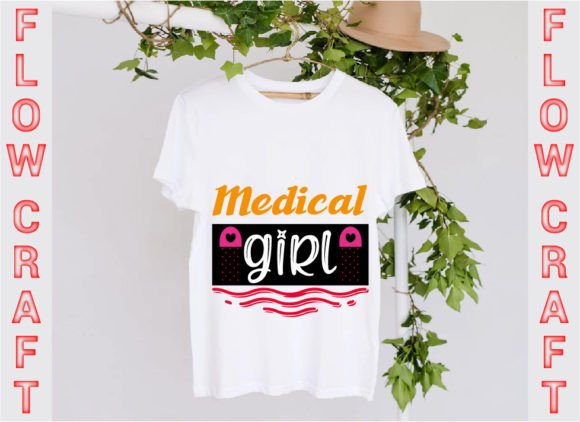
Medical Girl: A Designer’s Take on Vector-Based Embroidery Assets
As someone who has spent years translating digital concepts into tangible, stitched realities, I approach every new machine embroidery design with a mix of curiosity and skepticism. We have all been there: downloading a file that looks pristine on screen but turns into a tangled mess of thread breaks and puckering on the fabric. That is why when I encountered Medical Girl, my first instinct was not to immediately hoop it up, but to analyze its structural integrity and potential for real-world application.
This is not just another generic clipart bundle. Medical Girl arrives as a digital download with a specific promise: it is built from 100 vector shapes, making it fully editable and resizable. For an embroidery designer or an Etsy seller, this distinction is critical. Most standard embroidery files are fixed in size and stitch count. If you try to shrink them too much, the details vanish; enlarge them, and they look pixelated or sparse. However, because this asset is rooted in vector graphics, it offers a level of flexibility that is rare in the world of pre-digitized designs.
First Impressions and Visual Personality
The immediate mood of Medical Girl is professional yet approachable. It captures the essence of healthcare professionalism without feeling sterile or cold. The layout is clean, with defined lines that suggest clarity and care. When I visualized this as a finished product, I did not see it as a complex, high-density piece requiring hours of machine time. Instead, I saw a versatile graphic that could serve as a focal point on a tote bag or a subtle accent on a scrub cap.
The fact that it is categorized under T-Shirt Designs and Graphics might limit its perceived use case for some, but I urge you to look broader. In the context of embroidery, "graphics" often imply bold, clear shapes that translate well to satin stitch or fill stitch applications. The simplicity here is a strength. It means the design is less likely to suffer from registration issues on textured fabrics, a common headache for those working with terry cloth towels or thick sweatshirts.
Real-World Application: Beyond the Screen
To truly evaluate Medical Girl, I imagined a specific scenario. A local clinic was looking for branded merchandise for their annual health fair. They needed items that were durable, professional, and appealing to both staff and patients. A custom embroidered tote bag came to mind. Using this design, the visual impact would be immediate. Because the file is easy to modify and change color, I could match the clinic’s specific brand colors exactly, rather than settling for the closest available thread shade in a pre-set palette.
Consider also the market for personalized gifts. A nurse graduating from nursing school or a doctor celebrating a milestone would appreciate a high-quality hoodie or apron featuring this motif. The design’s clean lines ensure that it remains legible even when scaled down for a baby onesie or a small embroidered patch. This versatility is what separates a usable asset from a novelty item. For small shop owners and craft business operators, this means one purchase can yield multiple product lines: from large poster prints to delicate apparel decorations.
Navigating Technical Constraints
While the vector-based nature of Medical Girl is a significant advantage, it does not absolve the user from doing their due diligence. Since the product description notes it is ready to print on various surfaces, we must remember that printing and stitching are different beasts. If you are converting these vector shapes into an embroidery file yourself, or if the download includes a digitized version, you must pay attention to stitch density.
For example, if you plan to use this on stretchy fabric like a performance scrub top, you need to ensure the stitch pattern allows for movement. Dense fill stitches can cause puckering, while running stitch outlines might get lost on dark fabric. I always recommend testing the design on scrap fabric first. Check how the thread colors contrast against your chosen background. A white thread on a light gray shirt will disappear, no matter how good the design is.
Another critical area is the hoop size. Although the file size is listed as 6x6 inch, always confirm the actual dimensions of the digitized embroidery file if one is provided separately from the vector graphics. If you are working with a smaller hoop, such as a 4x4 for caps or baby items, you may need to resize the design. Because it is made of vector shapes, resizing should maintain clarity, but you must re-evaluate the stitch count and density after resizing to prevent thread breaks.
Commercial Viability and Brand Consistency
For Etsy sellers and handmade shop owners, the aesthetic consistency of your products builds trust. Medical Girl offers a polished look that elevates the perceived value of the finished product. It does not look like a hastily applied iron-on transfer; when stitched properly, it has texture and depth. This tactile quality is what customers are paying for when they buy a handmade product.
Moreover, the ability to create printable mockups using the vector files before you even touch the embroidery machine is a huge time-saver. You can present clients with realistic previews of how the design will look on a sweatshirt, apron, or pillow cover. This reduces revision rounds and increases buyer engagement. It allows you to sell the vision before you commit the thread.
Practical Notes for the Embroiderer
Before you start your next project with Medical Girl, keep these practical tips in mind:
- Stabilizer Selection: Choose a stabilizer that matches your fabric weight. For lightweight cottons, a cut-away stabilizer provides lasting support, while tear-away might suffice for stable woven fabrics.
- Thread Choice: Since the design is easy to modify, experiment with thread textures. A matte rayon might give a softer, more medical feel, while a shiny polyester could make the design pop on dark uniforms.
- Detail Inspection: Zoom in on the vector shapes. Are there any tiny corners or intricate details that might be difficult to stitch? If so, consider simplifying those areas or using a satin stitch border to define them.
- Licensing Check: Always confirm the licensing terms before selling finished items. While the description mentions it is ready for commercial use like t-shirts and posters, ensure that the specific license covers mass production or digital resale if you plan to offer it as a design asset.
In conclusion, Medical Girl is a robust resource for designers who value flexibility and professionalism. It bridges the gap between digital graphic design and physical embroidery, offering a tool that can adapt to various projects, from holiday embroidery gifts to everyday commercial apparel. By understanding its strengths and respecting the technical requirements of embroidery, you can create finished products that are not only visually appealing but also durable and meaningful.